How to Clean, Sand and Seal Pavers: A Step-by-Step Guide
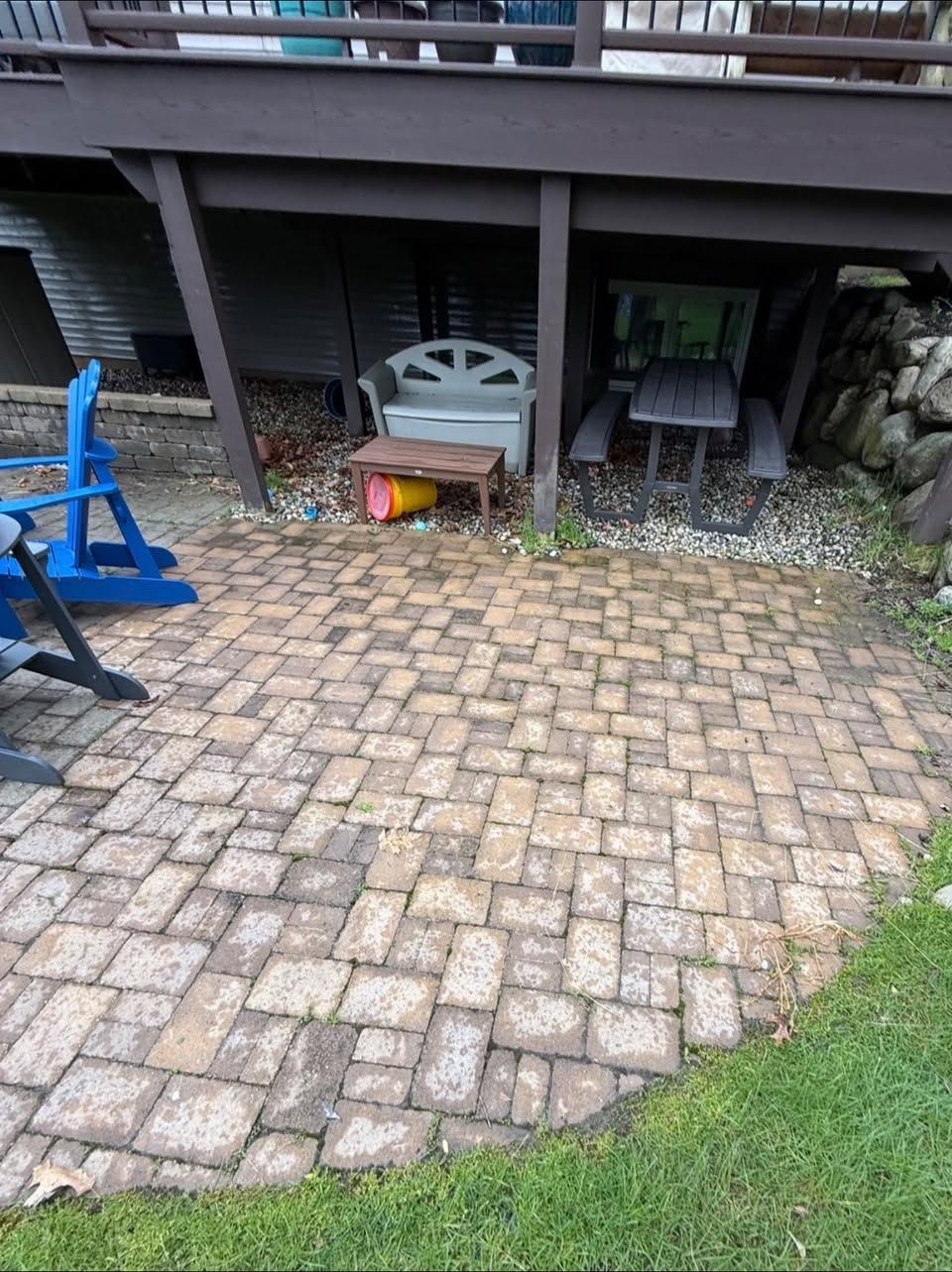
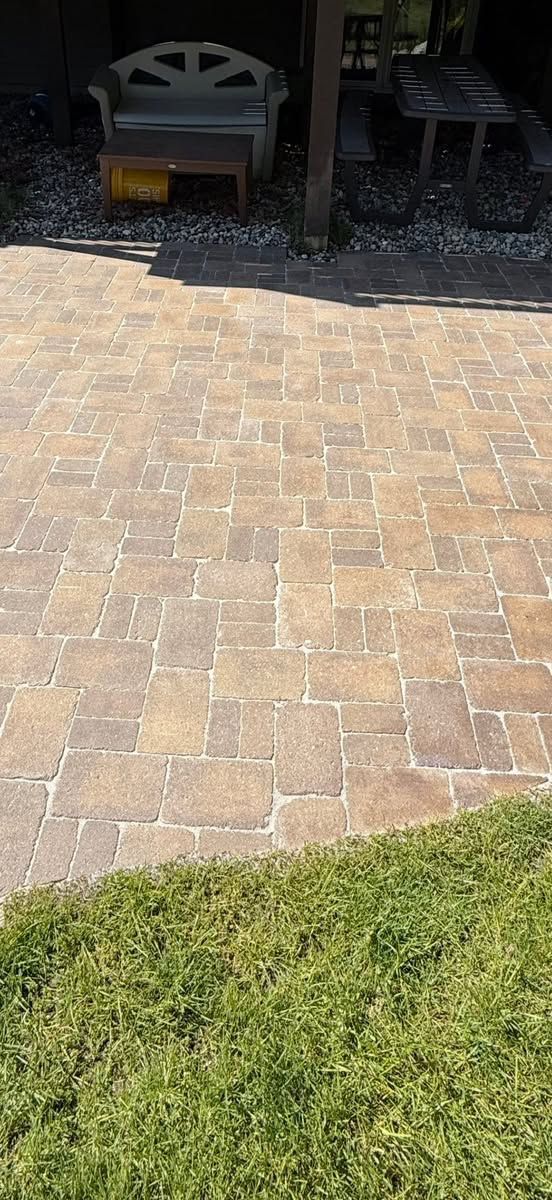
A real Southwest Michigan paver restoration—from worn joints and surface buildup to fresh sand, an even Trident finish and a protected patio.

A faded paver patio is rarely fixed by spraying sealer over the top. Long-lasting results come from treating the surface, joints and sealer as one complete system. The before-and-after photos in this guide are from a real Blue Wheel paver restoration in Southwest Michigan, first shared on our Facebook page on June 29, 2026.
The exact cleaner, sand and Trident sealer depend on the paver material, existing coating, joint condition, drainage and finish you want. We inspect and test the surface before choosing the system.
Step 1: Inspect, strip if needed and clean
Move furniture and planters, protect nearby surfaces and inspect for drainage, movement, damaged pavers and old coatings. If an incompatible sealer is present, it must be removed before a new system is applied.
Clean the pavers evenly with the right cleaner and only the pressure needed. Excessive pressure can damage the paver face. When joint material is failing, remove enough old sand to create at least one inch of depth for a properly installed replacement. Never let cleaner dry on the surface; rinse thoroughly while it is still wet.
Before: surface buildup, worn joints and faded-looking pavers.
Step 2: Let the pavers and joints dry completely
Moisture can interfere with both sand installation and sealer performance. Trident guidance generally calls for at least 24 hours after cleaning or rain before installing PolySweep polymeric sand or SEK joint sand. Shade, cooler temperatures and site conditions can require more drying time.
Step 3: Install and compact the correct joint sand
On the polymeric-sand route shown in our Facebook guide, we use a high-quality commercial product, sweep it into dry joints and compact it to eliminate hidden voids. We refill after compaction, finish the sand at the bottom of the paver chamfer—or about 1/8 inch below a non-beveled surface—and remove all loose sand and dust from the paver faces before activation.
Not every restoration uses the same sand system. PolySweep polymeric sand is activated with water. Clean ASTM C144 joint sand is not water-activated; it is hardened by a compatible Trident joint-stabilizing sealer. We follow the exact instructions for the sand and sealer selected for the property rather than mixing the two systems.
Step 4: Prepare the surface for sealer
After the sand has dried for the required time, blow the surface perfectly clean. Pretest the actual paver in a small, inconspicuous area for appearance and compatibility. The selected Trident product must match the substrate, any prior treatment, site exposure and the homeowner’s preferred finish.
Step 5: Apply the Trident sealer evenly
We schedule the work inside the selected product’s exact temperature and rain window. The sealer is applied at the specified coverage rate, slowly and evenly, without puddles. On a joint-stabilizing application, the material is worked into the joints, then the surface is back-rolled and evened for a consistent finish.
Step 6: Protect the surface while it cures
Keep rain, condensation, dust, foot traffic and vehicles off the surface for the time required by that specific product and the site conditions. Dry and cure times are not universal, so the current Trident technical data sheet controls.
After: clean pavers, fresh joint sand and a restored, even appearance.
What paver sealing can—and cannot—do
• Helps reduce joint-sand washout, weed growth and insect intrusion
• Can protect against staining and weather exposure
• Can create a natural, matte, satin, wet-look or gloss appearance when the finish is compatible
• Does not repair a failed base, active movement or drainage defects
Paver sealing is a complete preparation-and-protection process, not a quick spray-on add-on. Results depend on the paver, its age and porosity, joint size, previous treatments, installation method, temperature and site conditions.
Common paver sanding and sealing questions
Do all pavers need new sand?
No. We inspect the depth and condition of the existing joints first. Some areas need full replacement; others may need only targeted work.
Does sealing stop every weed?
No. Correct sand and a compatible stabilizing system help reduce weed growth, but no professional outdoor-joint system is permanently weed-proof.
Can new sealer go over an old coating?
Not automatically. Unknown or incompatible coatings can cause whitening, peeling or an uneven appearance. The existing treatment must be evaluated and may need to be stripped.
How long does the process take?
Most restorations are multi-step, multi-day jobs because cleaning, drying, sanding, activation, sealing and curing each have their own weather requirements.
What finish should I choose?
We pretest the pavers and recommend a compatible Trident system based on the material, previous treatments, traffic, exposure and your preferred appearance.
Need paver sanding and sealing in Kalamazoo or Southwest Michigan?
Blue Wheel restores paver patios, walkways and driveways using a condition-led preparation process and professional Trident products. Call 269-895-5325 or request a paver restoration quote through our Contact page.